Comprehending the Refine: Just How Aluminum Foundries Develop High-Quality Products
Aluminum foundries play an essential function in generating premium items via a thorough process. It begins with melting raw aluminum, which removes pollutants. Later, various molding methods shape the steel into wanted kinds. Accuracy during pouring and solidification is crucial to meet precise specifications. The final stages entail ending up touches that boost toughness and look. As technology advancements, these processes are improved better. What innovations are forming the future of aluminum foundries?
The Melting Process: Changing Raw Aluminum
The melting process works as a critical step in transforming raw aluminum into usable products. Aluminum scrap or raw ingots are put in a heater where they are subjected to high temperatures, usually reaching around 660 degrees Celsius. This intense heat creates the aluminum to melt, permitting contaminations to climb to the surface area, where they can be skimmed.
Numerous melting strategies, such as induction melting or gas-fired melting, might be utilized depending on the certain requirements of the foundry. The choice of technique can influence energy effectiveness and metal quality. Maintaining specific temperature level control is necessary to guarantee uniform melting and to avoid oxidation that can endanger the product.
Once melted, the aluminum awaits further processing, setting the stage for subsequent operations that will mold and mildew it into specific forms and products. Wisconsin Aluminum Foundry. The quality of the melting procedure directly influences the integrity of the final aluminum products created
Molding Techniques: Shaping the Future
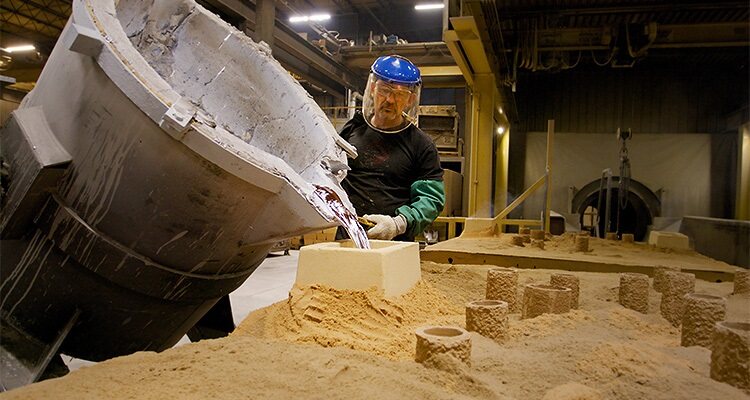
After the aluminum has been melted and impurities removed, it awaits forming via various molding techniques. One of the most common approaches is sand spreading, where a mold and mildew is created from sand and a binder. This method permits detailed layouts and is affordable for low to medium manufacturing runs. Another prominent technique is pass away casting, which entails requiring liquified aluminum right into a steel mold under high stress. This method causes high accuracy and smooth surface areas, making it excellent for mass manufacturing.
Irreversible mold spreading is additionally made use of, utilizing recyclable mold and mildews that improve dimensional accuracy and surface area coating. Each molding strategy uses one-of-a-kind advantages, enabling foundries to tailor their processes based on item requirements and manufacturing quantity. By selecting the proper approach, aluminum foundries can guarantee remarkable top quality and efficiency in their last items, solidifying their duty in numerous markets.
Pouring and Solidification: The Art of Casting
Pouring molten aluminum right into molds marks an important stage in the casting procedure, where precision and timing are vital - Wisconsin Aluminum Foundry. The factory group must very carefully regulate the temperature level of the aluminum to guarantee perfect fluidity, avoiding problems such as porosity or chilly shuts. As the steel is poured, it flows into the ins and outs of the mold and mildew, filling every cavity to create the desired form
Solidification starts right away as the liquified aluminum cools and transforms to a solid state. This phase is influenced by several variables, including the mold product, density, and ambient temperature level. The cooling price has to be handled to avoid stress cracks or bending in the finished product.
As soon as strengthened, the aluminum handles the precise dimensions and qualities of the mold and mildew, establishing the stage for read more subsequent handling. This pouring and solidification procedure exemplifies the delicate balance of art and scientific research in aluminum casting, essential for creating top quality items.
Ending Up Touches: Making Sure High Quality and Accuracy
Assuring top quality and accuracy in aluminum items needs thorough interest to information throughout the completing process. This phase entails various techniques focused on boosting the surface characteristics and dimensional precision of the cast elements. Usual techniques include machining, surface treatment, and polishing. Machining corrects any dimensional disparities and accomplishes the desired resistances, while surface therapies, such as anodizing or powder covering, offer rust resistance and improve aesthetic allure.
Sprucing up gets rid of surface flaws, leading to a smooth surface that satisfies rigorous specifications. Quality control is critical; each finished piece undertakes rigorous evaluation to identify any type of issues. Advanced determining tools, like coordinate measuring equipments (CMM), are often employed to guarantee conformity with design requirements. Furthermore, knowledgeable specialists play a necessary function, bringing experience and knowledge to identify issues that devices might ignore. This thorough completing process eventually guarantees that the aluminum products satisfy consumer expectations for high quality and performance.
Innovations in Aluminum Foundry Technology
The quest of top quality and precision in aluminum products has brought about considerable improvements in shop innovation. Technologies such as robotic automation have structured processes, boosting effectiveness and reducing human error. These robotics are currently efficient in doing complicated tasks, consisting of specific mold handling and product pouring, which ensures constant product high quality.
In addition, the combination of computer system numerical control (CNC) makers has actually reinvented machining procedures, enabling detailed layouts and tighter resistances. Advanced simulation software facilitates far better procedure preparation by maximizing and forecasting possible flaws steel circulation. Additionally, the adoption of eco-friendly practices, such as recycling aluminum scrap and using low-emission furnaces, has boosted sustainability in the market.
Regularly Asked Concerns
What Kinds of Aluminum Alloys Are Frequently Utilized in Factories?
Generally made use of aluminum alloys in foundries include 356, 319, and 413. These alloys are understood for their superb casting residential or commercial properties, mechanical toughness, and resistance to corrosion, making them suitable for a wide range of applications.
Exactly How Do Foundries Guarantee Environmental Sustainability in Their Procedures?
Foundries carry out ecological sustainability by recycling aluminum scrap, optimizing energy efficiency, reducing exhausts, making use of green materials, and adhering to regulative standards, thus minimizing their eco-friendly footprint while maintaining production high quality and effectiveness.
What Precaution Are Implemented in Aluminum Foundries?
Aluminum foundries apply various safety and security measures, consisting of personal protective equipment, ventilation systems, routine safety training, emergency feedback methods, and equipment upkeep checks. These practices intend to reduce threats and ensure the well-being of all employees involved.
Exactly How Do Factories Handle Issues in Cast Products?
Factories resolve problems in cast items by utilizing extensive examination methods, consisting of aesthetic checks and non-destructive screening. When issues are recognized, they may revamp or ditch items, guaranteeing adherence to high quality requirements and consumer requirements.
What Is the Typical Lead Time for Aluminum Spreading Projects?
The typical preparation for aluminum casting jobs ranges from a few weeks to several months. Elements influencing this timeline include style intricacy, production quantity, and the accessibility of materials, which vary significantly throughout various foundries.
Aluminum foundries play a vital function in creating premium items via a careful process. Wisconsin Aluminum Foundry. The shop group need to meticulously control the temperature of the aluminum to guarantee suitable fluidity, avoiding defects such as porosity or chilly shuts. The pursuit of top quality and accuracy in aluminum products has led to considerable improvements in shop innovation. Generally made use of aluminum alloys in foundries include 356, 319, and 413. Aluminum foundries carry out numerous security actions, including individual safety tools, air flow systems, regular security training, emergency feedback methods, and devices upkeep checks
Comments on “Exploring Metal Castings and Their Role in Precision Fabrication”